May 21, 2026
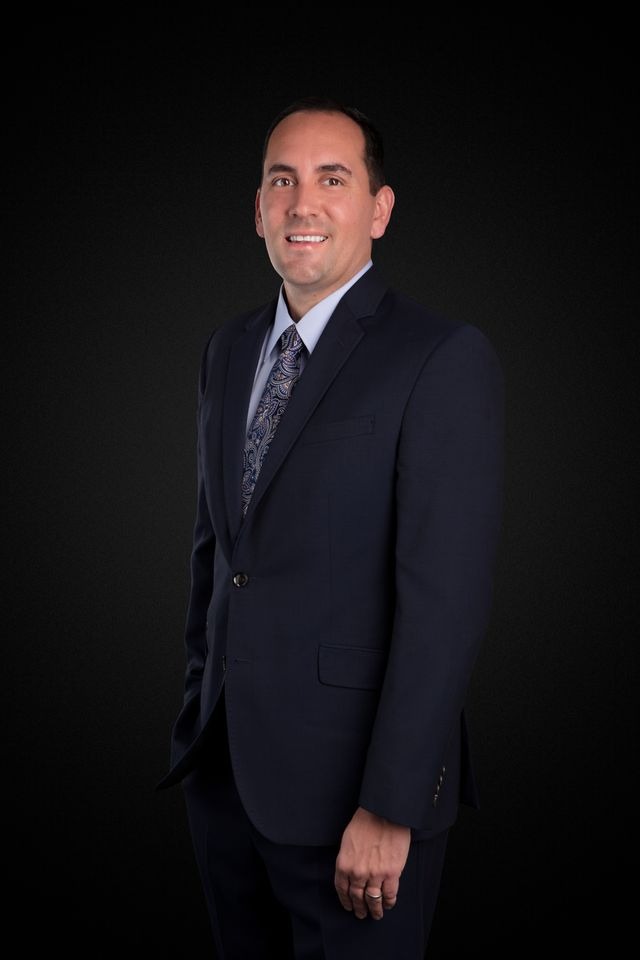
By James Tawney
Read Time: 5 minutes
In the News
You were doing everything right. You were on the road, minding your own business, when a commercial truck driven by someone you had never heard of, hired by a company you did not know existed, changed your life in an instant. Now you are trying to figure out who is responsible, and the answer has always been more complicated than it should be.
For years, a federal law gave freight brokers, the companies that arrange truck shipments for a living, a legal shield that kept injured victims out of court. On May 14, 2026, the Supreme Court of the United States took that shield away. At Tawney, Acosta & Chaparro P.C., we have spent years fighting for people in exactly this position, and this ruling changes what we can do for you.
What Is the Federal Aviation Administration Authorization Act, and Why Did It Matter?
The Federal Aviation Administration Authorization Act (FAAAA), despite its name, regulates trucking, not aviation. Enacted in 1994, it deregulated trucking by blocking states from setting their own rules on prices, routes, and services. Freight brokers, responsible for about a third of US freight, successfully argued that this law also protected them from negligent-hiring truck accident lawsuits, preventing injured victims from holding them accountable even when they hired carriers with poor safety records. Many courts agreed, leaving victims without full accountability.
What Happened in Montgomery v. Caribe Transport?
The case that changed everything began on an Illinois highway when a truck driver named Yosniel Varela-Mojena, hauling a load of plastic pots for motor carrier Caribe Transport II, veered off course and struck Shawn Montgomery’s tractor-trailer on the shoulder. Montgomery lost his leg and sustained other severe, permanent injuries.
C.H. Robinson Worldwide, Inc., one of the largest freight brokers in the country, had arranged the shipment even though federal regulators had already given Caribe Transport a conditional safety rating, flagging deficiencies in driver qualification, crash rate, and other areas, before C.H. Robinson hired them.
Montgomery filed a truck accident lawsuit against C.H. Robinson for negligently selecting a carrier it knew, or should have known, posed a serious risk to others on the road. Both the federal district court and the Seventh Circuit ruled against him. The Supreme Court agreed to review the case.
What Did the SCOTUS Ruling Decide?
In a unanimous decision that crossed ideological lines, the Supreme Court reversed the Seventh Circuit on May 14, 2026. Justice Barrett wrote that the decision rests on a safety exception already written into the FAAAA. Although the law contains a preemption provision, which allows the law to override state laws, it contains a safety exception. That exception provides that the preemption provision does not restrict a state’s safety regulatory authority “with respect to motor vehicles.” The Court held that a freight broker liability claim concerns motor vehicles because it directly involves the trucks that carriers put on the road, requiring a broker to exercise reasonable care when selecting a carrier. That connection brings the claim within the safety exception, which saves it from preemption. The Court also clarified that the safety exception applies only to claims involving motor vehicle safety.
Why Does Suing a Freight Broker Matter for Truck Accident Victims?
Before this ruling, freight brokers operated in what Justice Kavanaugh’s concurring opinion described as a regulatory black hole. Here is what that means in practice for truck accident victims:
- No federal safety floor for broker hiring. Federal law did not require brokers to take meaningful steps to verify the safety of the carriers they selected. A broker could knowingly hire a carrier with a documented history of unsafe drivers, poorly maintained trucks, or repeated federal violations, and no regulation stopped them.
- State law could not fill the gap. Many courts held that the FAAAA preempted state negligent-hiring claims against brokers entirely. When victims tried to hold brokers accountable in court, those brokers pointed to federal preemption and walked away.
- This ruling closes both of those doors. Victims who suffer injuries in truck accidents now have a viable legal path to pursue the broker that put a dangerous carrier on the road, in addition to the carrier and driver themselves.
That accountability matters enormously in practice. Brokers like C.H. Robinson operate at a massive scale, arranging shipments for hundreds of thousands of carriers, and their carrier selection decisions affect the safety of every driver sharing the road with those trucks.
How Tawney, Acosta & Chaparro P.C. Fights for Injured Clients in Freight Broker Liability Cases
This ruling opens doors that were closed to truck accident victims for years, and pursuing those claims requires attorneys who know truck accident litigation from the ground up.
Partners James Tawney and Alejandro Acosta both hold Board Certification in Truck Accident Law from the National Board of Trial Advocacy, allowing potential clients to find specialized legal representation. TAC has secured results that reflect what that preparation produces, including:
- A $30 million settlement for a 22-year-old woman whose spine a distracted truck driver destroyed,
- A $4.715 million verdict for a client with severe spinal injuries after a semi-truck crash, and
- A $1 million settlement for a client sideswiped by a commercial truck driver on I-10.
TAC serves clients across Arizona, Texas, and New Mexico, fighting for victims of serious injury and wrongful death, with a 4.9 out of 5-star rating from 381 third-party reviews, demonstrating the care and consideration TAC provides to every client.
This Ruling Just Changed Your Options. Call Now.
The legal landscape for truck accident victims shifted this month, and TAC will use this ruling to pursue accountability that was previously unavailable. Contact Tawney, Acosta & Chaparro P.C. online today or call (575) 222-1000 for a free case review and find out what this decision means for your specific situation.
FAQs
What Is a Freight Broker?
A freight broker is a company that arranges transportation by connecting shippers who need goods moved with motor carriers who perform the actual transport. Brokers do not own trucks or employ drivers directly; they coordinate the shipment and select the carrier.
What Does Preemption Mean for Truck Accident Victims?
Preemption means a federal law overrides a state law, preventing a plaintiff from bringing a state-based lawsuit when the subject is covered by a federal law. Before this ruling, many courts held that the FAAAA preempted state negligent-hiring claims against freight brokers, effectively blocking those lawsuits entirely.
Does This Ruling Apply to My State?
Yes. The Supreme Court’s decision is binding nationwide. Any federal or state court in the country must now apply this interpretation of the FAAAA’s safety exception when evaluating negligent-hiring claims against freight brokers.
What Is a Negligent-Hiring Truck Accident Claim Against a Broker?
A negligent-hiring claim argues that a broker failed to exercise reasonable care when selecting a motor carrier and that the failure caused the plaintiff’s injuries. This ruling confirms that state law can impose a duty of care on brokers without being preempted by federal law.
Does This Ruling Mean Brokers Are Automatically Liable for Truck Accidents?
No. This ruling means victims can bring the claim in court; it does not guarantee any outcome. A plaintiff still must prove that the broker failed to exercise reasonable care in selecting the carrier and that the failure caused the injuries at issue.
Legal References Used to Inform This Page:
To ensure the accuracy and clarity of this page, we referenced official legal and other resources during the content development process:
James Tawney is a dedicated advocate for injury victims throughout the Southwest. Born and raised in Arizona, he graduated summa cum laude from Northern Arizona University before earning his law degree from Texas Tech University School of Law. In 2016, James co-founded Tawney, Acosta & Chaparro P.C., where he continues to focus on protecting the rights of individuals and families harmed by negligence.
Rate This post
★
★
★
★
★
Be the first to rate!